
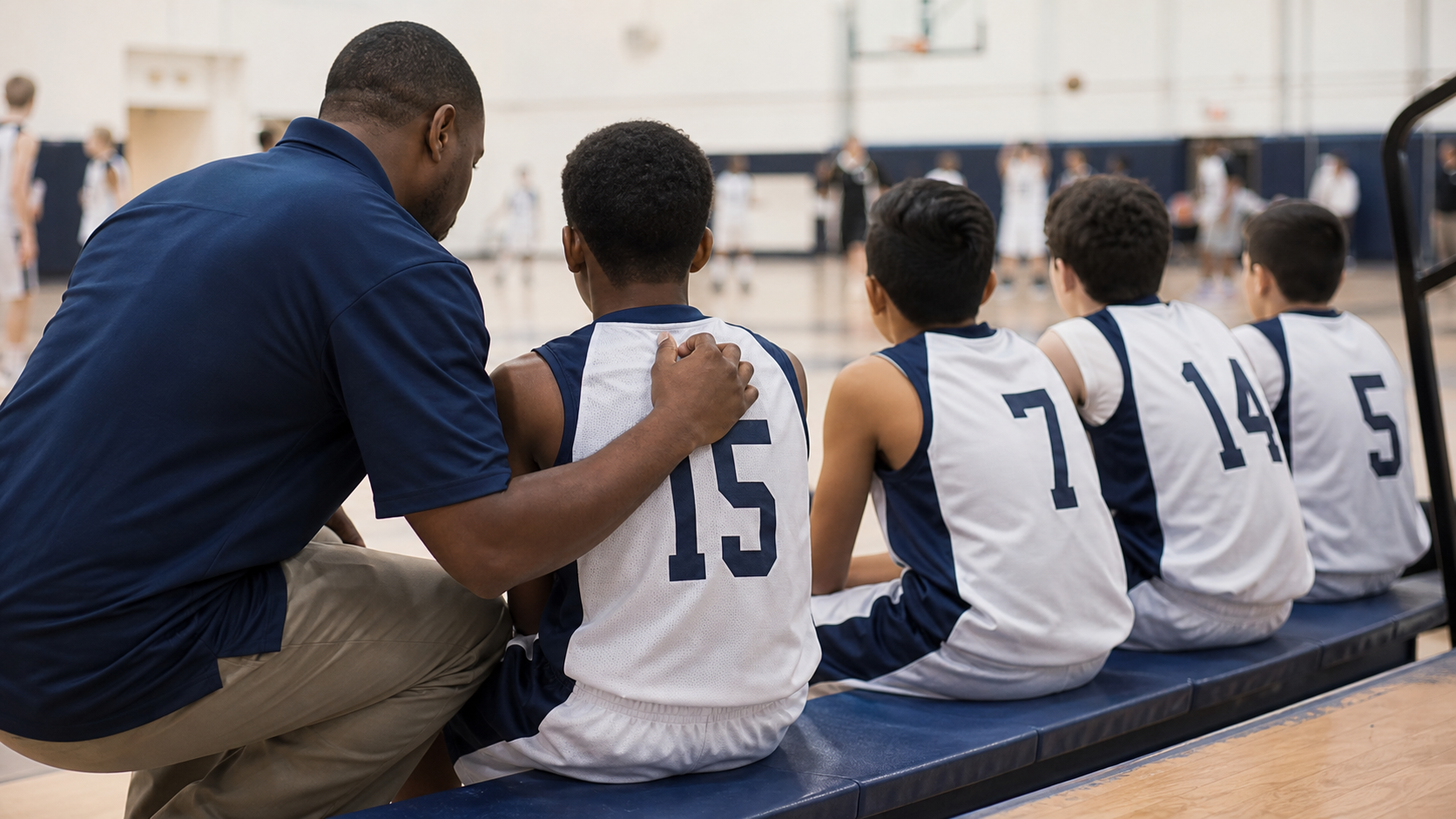
How Coaches Can Make Bench Time Less Isolating for Young Athletes
TL;DR
Bench time feels less isolating when a coach makes three things clear: what the athlete can do while they are out, what they should look for when they re-enter, and when the next conversation can happen. The goal is not to make every athlete happy with every decision.
It is to make sure no young person is left guessing whether they still belong.
There are plenty of competitive situations where a coach has to make choices. But silence is not a strategy. For a young athlete, a long stretch on the sideline can quickly become a story about their place on the team. A short, specific plan gives them something better to hold onto.
Why the bench can feel bigger than the minutes
Young athletes do not experience a game only through the final score. They notice whether anyone explains a change, whether teammates still involve them, and whether there is a useful next action.
The Aspen Institute’s State of Play 2025: Coaching Trends discusses playing time in U.S. youth sports. Its report, informed by interviews, research, and data reviewed by Project Play, says that through age 12 it recommends equal playing time and notes that being stuck at the end of the bench does not foster development. That is a recommendation, not a rule for every league, age, or competitive setting. It is still a useful reminder: children need access to action and context, not only a place to sit.
A coach does not need a long speech in the middle of a game. The better standard is a brief, repeatable cue that answers: What is my job right now?
Use the Next-Role Sideline Plan
The Next-Role Sideline Plan is a three-part routine for any athlete who is waiting to enter, coming out after a shift, or receiving less time than they expected.
- Name the immediate role. Give one observable job: watch the other team’s transition, help a teammate remember the next matchup, notice how an opponent starts a set, or get ready for the next rotation. Avoid vague instructions such as “stay locked in.”
- Name the re-entry cue. Tell the athlete what the staff is looking for when the moment comes: defensive communication, a calmer first touch, a sprint back, a safe decision, or a prepared substitution. This is not a promise of a particular minute. It is useful information.
- Name the follow-up point. If the athlete has a bigger question, give it a proper place: after the game, at the next practice, or in a brief scheduled check-in. Do not make a young person negotiate their role in the heat of competition.
The plan works because it turns waiting into participation. It also protects the coach from trying to solve a larger playing-time conversation while the game is moving.
Keep athletes connected without creating fake jobs
Do not give an athlete busywork just to make the bench look active. Give them a role that genuinely helps the team and can be explained in one sentence.
- Observation role: Track one pattern the group needs to notice, such as where an opponent creates space or when a serve receive breaks down.
- Preparation role: Have the athlete rehearse the first task they will handle when they enter: a matchup, a restart, a rotation, or a simple support position.
- Connection role: Ask for one useful teammate cue—encouragement is welcome, but make it specific: remind a teammate about the next assignment or acknowledge a good recovery.
These roles should never require public criticism, secret scouting, or recording private information. The point is participation and learning, not surveillance.
Have the larger conversation away from the sideline
When an athlete asks about playing time, a coach can be honest without making a sweeping judgment about talent. Start with the situation, then move to a next action.
Try this sequence:
- Listen first: “Tell me what you noticed today.”
- Name one concrete factor: “In this game, we needed more help with defensive recovery,” or “We were managing a specific rotation.”
- Give one controllable next rep: “At practice, let’s work on your first two steps after the ball changes hands.”
- Set a check-back: “Let’s revisit it after Thursday’s practice.”
This does not eliminate disappointment. It does make the feedback usable. It also prevents a single game from becoming a permanent label.
What teammates and parents can do
Teammates can help by keeping a player in the social circle: share the next cue, make room in the huddle, and avoid treating the sideline as a separate group. Parents can support the conversation by asking what the athlete noticed and what they want to work on before trying to solve the decision in the car.
If an athlete appears distressed, is being singled out, or is repeatedly excluded without a clear and appropriate team process, that calls for a calm adult conversation with the coach or program leader—not a public confrontation during a game.
Where OVR fits
This is a Jab, not a product workflow. The useful habit comes first: clear roles, specific feedback, and a real follow-up. Teams that choose to document practice priorities or team communication should keep those records purposeful and appropriate for the audience; not every coaching note belongs on a public page.
A small standard worth keeping
Before the next game, ask one question: Could every athlete tell me their next useful job if they are not on the field or court? If the answer is no, give the team a simpler sideline language. It takes only a few words to make waiting feel like part of the work rather than evidence that an athlete has been forgotten.
Related reading
- How Coaches Can Recognize Impact Beyond Scoring
- How to Give an Athlete Useful Feedback After a Tough Game
- How Coaches Can Set Effort Goals Athletes Can Actually Use
- Explore OVR Teams
Source
Aspen Institute Project Play, “State of Play 2025: Coaching Trends” — United States, 2025. The coaching-trends section is informed by youth-sports-leader interviews, Project Play analysis, and cited research/articles. Its equal-playing-time recommendation is specifically stated for children through age 12; it should not be presented as a universal league rule.
Frequently asked questions
Should a coach promise every athlete equal playing time?
No single article can set a team’s policy. League rules, age, safety, and competition context matter. What a coach can always do is make the current role and the next useful action clear.
What should a coach say to a player on the bench?
Keep it short and specific: name one thing to watch or prepare for, then say what the player should be ready to do when called on. Save a longer playing-time discussion for a calmer moment.
How can parents talk about limited playing time after a game?
Start with the athlete’s experience: ask what they noticed and what they want to work on. Avoid turning the car ride into a verdict on the athlete, coach, or team.
Is it helpful to give bench players jobs?
Yes, when the job is real, brief, and connected to the game. Observation, preparation, and a specific teammate cue can keep an athlete involved without inventing busywork.
Key takeaways
- Why the bench can feel bigger than the minutes
- Use the Next-Role Sideline Plan
- Keep athletes connected without creating fake jobs
- Have the larger conversation away from the sideline
- What teammates and parents can do