
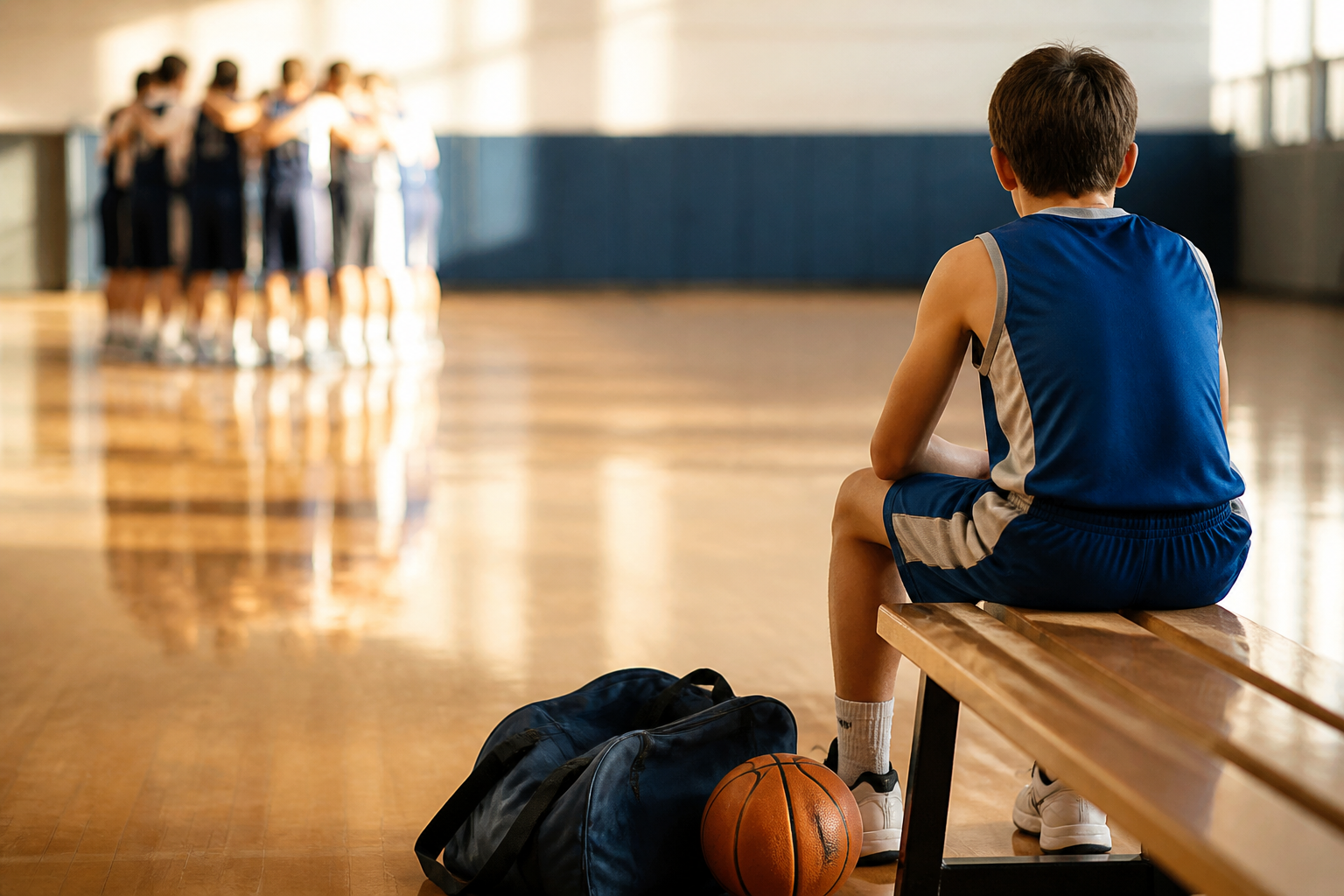
TL;DR: Being a good sport after a loss does not mean pretending the loss did not hurt. It means making room for the feeling, treating opponents and teammates with respect, and choosing one useful next step instead of turning one result into a verdict on a player.
Direct answer
After a loss, a young athlete can be a good sport by pausing before reacting, offering basic respect to opponents and teammates, naming one thing that was hard and one thing to learn, then returning to ordinary team connection. The goal is not forced positivity. It is a response that keeps a single score from becoming the whole story of the season.
Why losses can feel bigger than one game
A loss can carry more than a final score. It may follow a long drive, a close call, a difficult role, a missed chance, or the feeling that everyone is watching. That is why telling an athlete to “just get over it” rarely helps. A better standard is simple: feelings are allowed; disrespect is not required.
The U.S. Olympic & Paralympic Committee’s quality-coaching resources frame youth sport around a holistic, sustainable experience, not only a result. Project Play’s parent resources similarly collect practical guidance developed with youth-sport and health organizations. Neither source supplies a magic postgame script. They do support the larger idea that the experience around sport matters alongside competition.
For athletes, the immediate job is small. Finish the customary handshake or acknowledgement in the way the sport expects. Thank the people who helped. Take a breath before posting, texting, or replaying the last moment. Then leave room to be disappointed without making a teammate, official, or opponent the target.
The RESET routine: a four-step response that fits in the ride home
R — Regulate. Take a minute before explaining the game. Water, a walk, quiet, or a few slow breaths all count. The point is to avoid letting the first wave of emotion decide what gets said.
E — Extend respect. A handshake, a quick “good game,” or simply not escalating an argument is enough. Respect does not require acting cheerful or denying that a call felt frustrating. It asks athletes to keep the opponent’s humanity and their own standards in view.
S — Sort the game into facts and feelings. “I am disappointed” is a feeling. “We lost by two” is a fact. “I always mess up” is neither a useful fact nor a helpful conclusion. Separating these categories stops a hard moment from becoming an identity label.
E — Extract one lesson. Pick one controllable item for the next practice: communicate earlier, recover after a mistake, prepare gear the night before, or ask a question about a situation. One lesson is enough. A long critique immediately after a game usually becomes noise.
T — Turn back toward the team. Check on a teammate, help collect equipment, or send a short message that does not dissect the game. The next connection can be ordinary. That is often what makes a group feel safe after a tough result.
What parents can say without taking over
Parents do not need to deliver a postgame speech. A calm question creates more room than a diagnosis. Try: “Do you want company, food, or quiet first?” Later, if the athlete wants to talk, ask, “What part felt hardest?” and “What is one thing you want to try next time?”
Avoid assigning blame, demanding an immediate lesson, or turning the drive home into a performance review. A parent can set a boundary around respect while still letting an athlete feel upset: “You can be mad about the result. You cannot take it out on your sister, teammate, or opponent.”
This approach also makes space for athletes who had a limited role. A player does not have to score, start, or play every minute for their experience to matter. Good sportsmanship includes how a team treats one another when the result is not what anyone wanted.
What coaches and teammates can keep simple
The postgame moment is not the best place for a full technical review. A coach can close with one shared acknowledgement—effort, a moment of resilience, or a practical next step—then save detailed feedback for a setting where athletes can absorb it.
Teammates have a role too. They can avoid replaying another player’s mistake, celebrate a small act of effort, and make sure no one is left alone at the edge of the group. These are culture choices, not scorekeeping tactics.
There is no need to manufacture a silver lining. Sometimes the honest line is: “That one stings. We will look at it tomorrow.” It respects the result while keeping the door open for growth.
Keep a season record that is bigger than the scoreboard
A season is made of more than wins and losses. Athletes can keep a short private record of moments they want to remember: a skill that felt better, a teammate who helped, a hard situation they handled differently, or a question to bring to practice. This is not a gradebook. It is context.
When an athlete chooses to build a public sports presence, that same principle matters: share what is accurate, meaningful, and comfortable to share—not every emotional moment in real time. OVR’s connected sports operating-system thesis is built around records, recognition, and stories having context across the season. This article is a Jab, not a product tutorial: the RESET routine works with a notebook, a conversation, or no platform at all.
Questions families often ask
Should a young athlete be forced to shake hands after a loss?
Follow the sport’s customary postgame expectations where safe and appropriate, while recognizing that an athlete may need a brief moment to regulate first. The aim is basic respect, not a forced performance of happiness.
What if an athlete cries after losing?
Crying can be a normal response to disappointment. Offer calm support and privacy if wanted. Address disrespectful behavior separately, but do not treat emotion itself as a failure.
How soon should a coach review mistakes after a game?
There is no universal timetable. If emotions are high, keep the immediate close brief and schedule the detailed teaching for a calmer practice or conversation.
What is one useful thing to say after a close loss?
Try: “That was hard. When you are ready, what is one thing you want to take into next practice?” It acknowledges the feeling without turning the result into a judgment.
Sources and context
- U.S. Olympic & Paralympic Committee, Quality Coaching Resources (United States; accessed 2026). A principles-and-resource hub for holistic, sustainable sport experiences; it is guidance, not a study of this article’s RESET routine.
- Aspen Institute Project Play, Youth Sports Resources for Parents (United States; accessed 2026). Parent checklists developed with input from organizations and researchers in the Project Play network; it is an expert-informed resource collection, not a universal rulebook.
Key takeaways
- Disappointment after a loss is normal; disrespect is not necessary.
- Use RESET: regulate, extend respect, sort facts from feelings, extract one lesson, and turn back toward the team.
- Parents can support without running a postgame review.
- One game result should not become an athlete’s identity or a season’s whole story.