
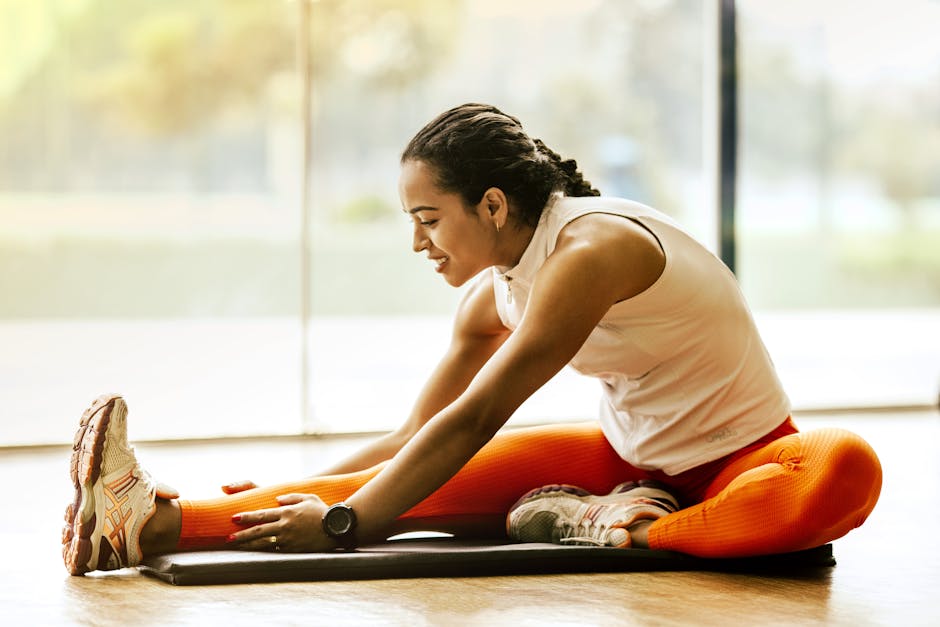
Improving Flexibility for Enhanced Sports Performance
How to Improve Your Flexibility for Sports
1. The Importance of Flexibility
TL;DR
Flexibility is an important attribute for athletes because it allows them to move their bodies in a variety of ways. This helps them to avoid injuries and perform at their best.
It's also important for people who just want to have a more comfortable life. Flexibility training can improve your overall health by helping you reduce your risk of chronic pain, improving your range of motion, and reducing stress in your muscles.
2. What Causes Stiffness and How to Prevent It
Stiffness is a common problem that can occur during sports. It can be a result of many things, including muscle imbalance, poor range of motion, and injury. To prevent stiffness, it is important to maintain good muscle balance and range of motion, and to avoid overly strenuous or repetitive exercise. Additionally, it is important to identify and treat any injuries so that they do not progress and cause stiffness.
3. Stretching Techniques for Different Parts of the Body
There are a variety of stretching techniques that can be used for different parts of the body. Hamstring stretches can be done by lying on your back with feet flat on the ground and knees bent to 90 degrees. Reach down with one hand and pull your hamstring towards your chest while pushing your heels into the ground with the other hand. Hold this stretch for 20-30 seconds before repeating on the other side.
For quadriceps stretches, stand with feet hip-width apart and spread your legs as far apart as possible. Bend both knees until your thighs are parallel to the ground, then lean forward and place both hands on the top of your thighbone. Hold this stretch for 20-30 seconds before repeating on the other side.
For shoulder stretches, lie face down with palms flat on the ground, hands shoulder-width apart. With either arm straight, slowly lift it up until it’s parallel to the ground, hold for 15 seconds, and then lower it back down.
4. Static Stretching: The Different Types of Static Stretches
Static stretching is a form of exercise that is performed without any accompanying movement. It is a popular way to warm up before workouts or as a post-workout routine to help ease tension in muscles. There are several types of static stretches, each with its own benefits. The most common type of static stretch is the quadriceps stretch. This stretch targets the quadriceps muscles, which are responsible for the extension of the femur (thighbone) and the hip joint.
The hamstring stretch is another common type of static stretch, and it stretches the hamstring muscles between the knee and ankle. Other types of static stretches include the calf stretch, which stretches the calf muscles; the thoracic spine stretch, which stretches the back muscles around your chest; and the neck stretch, which stretches the cervical (neck) muscle.
5. Dynamic Stretching: The Different Types of Dynamic Stretches
A dynamic stretch is a type of stretch that increases range of motion. There are three main types of dynamic stretches: static, active, and ballistic. Static stretching is the least active type of stretch and involves holding a position for a predetermined period of time. Active stretching involves moving the body into a stretch position and then holding that position for a specified amount of time. Ballistic stretching is the most active type of stretch and involves sudden movement into or out of a stretch position.
6. How to Start Improving Your Flexibility
We provided a variety of different stretches that you should include and add to your routine. But before you include the ones that would be particularly beneficial to you, try the following ones to gauge your initial flexibility so you don't hurt yourself. Start by lying on your back with your knees bent and feet flat on the ground. Place your palms flat on the ground next to your hips, then press your hips and heels into the palms and lift your torso off the ground. Hold this position for 30 seconds, then slowly lower yourself back to the starting position.
Next, try an elbow plank variation: Lie on your stomach with palms flat on the ground, then lift both arms and legs into the air, extending them perpendicular to each other. Hold this position for 30 seconds, then slowly lower yourself back to the starting position. Finally, try a modified cat-cow: Lie on your back with hands placed under your shoulders and legs in front of you, then slowly lift your hips and torso off the ground. Hold this position for 30 seconds, then slowly lower yourself back to the starting position.
Key takeaways
- How to Improve Your Flexibility for Sports
- 1. The Importance of Flexibility
- 2. What Causes Stiffness and How to Prevent It
- 3. Stretching Techniques for Different Parts of the Body
- 4. Static Stretching: The Different Types of Static Stretches