
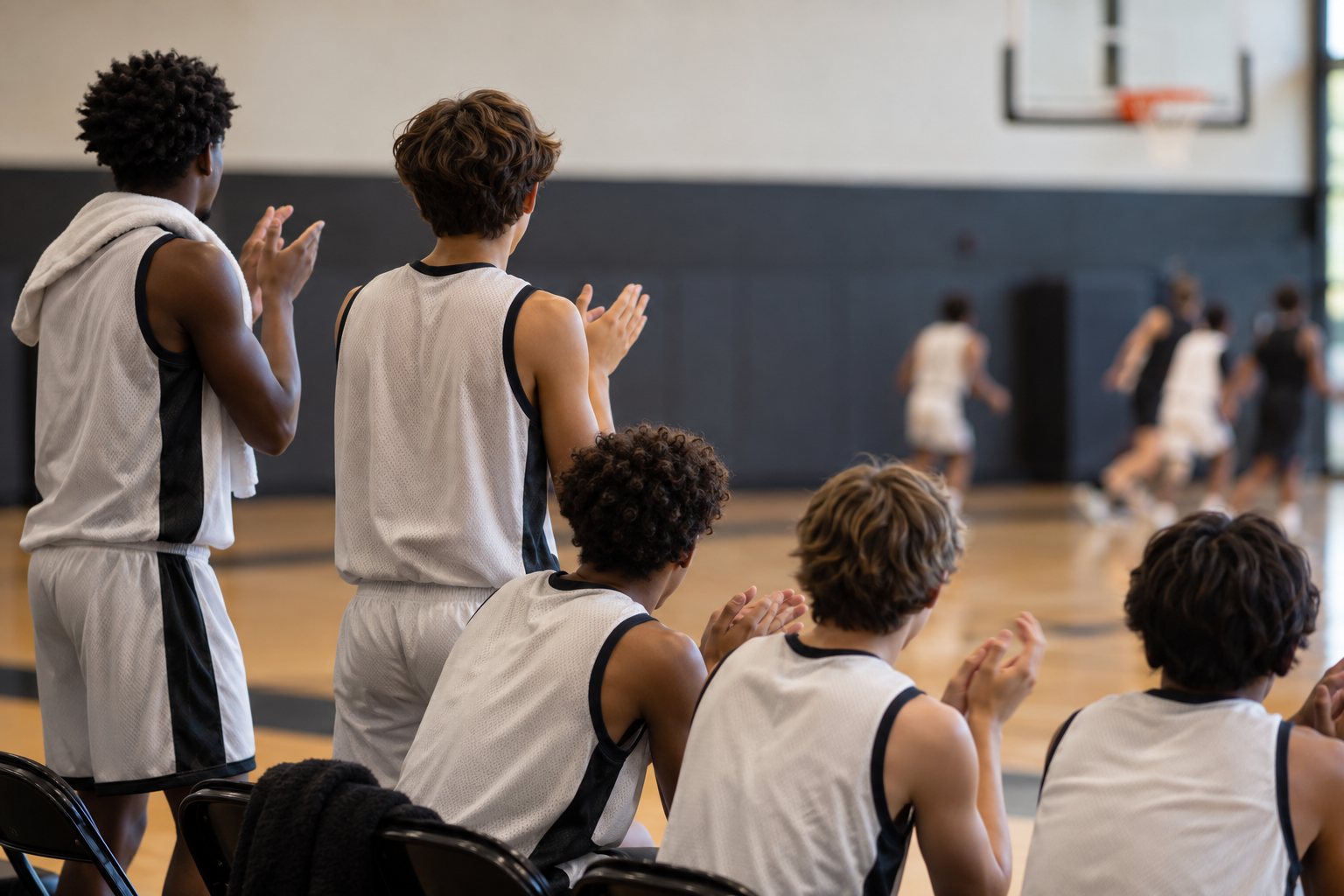
TL;DR: Strong team pride does not require a villain. Keep cheers about your own effort, connection, and next play; when the language shifts to a person or the other team, reset it before it becomes the point of the game.
Direct answer
You can cheer hard for your team without putting down an opponent by making the message about what your group is doing: effort, communication, a smart decision, a recovery, or the next play. A useful rule is simple: praise your side; do not make another young person the punchline. If a chant, sideline comment, or post would feel different with the teams switched, rewrite it.
Why this line matters
Competition naturally gives a game energy. Rivalries can create anticipation, shared rituals, and a reason to pay close attention. The problem is not caring about the result. The problem starts when a game needs a target in order to feel exciting.
The American Academy of Pediatrics advises adults to model sportsmanship because children notice and learn from that behavior. Its family-facing guidance also encourages judging young athletes by effort, sportsmanship, and hard work—not only outcomes. The Aspen Institute’s Children’s Bill of Rights in Sports similarly names respect for opponents, officials, and the game alongside the right to enjoy sport. Those are useful guardrails, not a script for every sideline.
For families and athletes, the practical question is smaller: What are we adding to this game when we cheer? If the answer is focus, confidence, connection, or appreciation, keep going. If the answer is embarrassment for someone else, the energy needs a new direction.
The Pride-Not-Put-Down rule
Use this three-part filter before a cheer, a caption, or a post-game retelling:
- Name your team’s action. “Great recovery,” “keep communicating,” or “way to stay with it” describes something your group can own.
- Leave the other person out of it. Avoid comments about an opponent’s mistake, body, ability, reaction, or identity. A young athlete does not need to be the contrast that makes your team feel good.
- Keep the next play available. The best game-day language points forward: reset, defend, pass, breathe, compete. It does not keep replaying somebody else’s bad moment.
This is not about making every reaction quiet or generic. “Our bench stayed engaged all game” has more meaning than a put-down because it points to a real choice. “We earned that stop” can be loud, proud, and specific without turning the other side into a joke.
What this sounds like in real moments
After a big play: Try “that was patient,” “great support,” or “we were ready for that.” Skip jokes about who got beaten or missed.
When the score gets lopsided: Keep encouragement connected to controllable actions: hustle back, communicate, finish the possession, help a teammate up. The score does not require a new standard for respect.
When a call feels unfair: A quick breath and a return to the next play is more useful than recruiting the crowd into an argument. Adults can model that reset even when they disagree.
After the final whistle: Tell the story of your team’s choices, not the other team’s shortcomings. “We stayed organized when we were tired” preserves a lesson worth remembering later.
A 30-second sideline reset
When the atmosphere turns sharp, do not try to deliver a lecture in the middle of a game. Use this short reset:
- Pause: stop the chant, comment, or repost.
- Name the standard: “We cheer for our team here.”
- Give a replacement: offer one action-focused line the group can use now.
- Move on: return attention to the game rather than publicly shaming the person who crossed the line.
That last step matters. A reset can protect the atmosphere without creating another performance of embarrassment.
Keep rivalry in proportion
A rivalry can be a story about history, proximity, a tough previous game, or two groups who know the stakes. It does not need to become a permanent label for the people in the uniforms. Young athletes change teams, roles, confidence levels, and sports. They should be able to leave a game with the memory of competing—not with a public record of adults or peers trying to diminish them.
Before a tournament, a family can decide what its own version of support sounds like. Before a season, a team can make one plain agreement: celebrate effort and execution; do not cheer for someone else’s mistake. The agreement is easy to remember when the game gets loud.
How to carry the right story forward
After a close game, save one or two moments that explain your own team’s experience: a recovery, a helpful communication moment, a player returning after a mistake, or a small ritual that kept the group together. That creates a more useful season memory than a caption built around an opponent.
If you keep a personal season record, attach enough context to make the moment understandable later: what happened, what your group chose to do next, and what you want to remember. For related reading, see How to Keep a Post-Game Tradition From Becoming a Performance Test, How to Celebrate a Win Without Turning It Into a Verdict, and How to Be a Good Sport After a Loss.
Frequently asked questions
Is it wrong to have a sports rivalry?
No. A rivalry can make a game feel meaningful. The boundary is whether the energy stays connected to your own team’s play and respect for everyone involved.
What should I say instead of commenting on an opponent’s mistake?
Name your team’s action or the next job: “stay connected,” “great pressure,” “reset,” or “finish this possession.” It keeps attention on something your group can control.
How can parents model better game-day behavior?
Use the same standard for yourself that you want young athletes to use: praise effort and choices, avoid personal comments about opponents or officials, and return to the next play when emotions rise.
What if another spectator starts a negative chant?
You do not need to escalate it. A calm, short alternative—“let’s cheer for our team”—can redirect your group. If a pattern continues, use the event’s established adult or organizer route away from the athletes.
Sources
- American Academy of Pediatrics / HealthyChildren, “Parents: Be a Good Sport Too” — United States, accessed September 2026. Family-facing guidance on adults modeling sportsmanship; it does not measure the effect of this article’s framework.
- American Academy of Pediatrics / HealthyChildren, “Tips to Prevent Sports Injuries in Children & Teens” — United States, accessed September 2026. Used only for its limited guidance that effort, sportsmanship, and hard work should matter alongside results; this is not rivalry-specific research.
- Aspen Institute Project Play, “Children’s Bill of Rights in Sports” — United States, accessed September 2026. Nonprofit youth-sports principles that include respect, fun, and social bonds; it is a values framework, not causal evidence.
Key takeaways
- Team pride can be specific and loud without making an opponent the target.
- The Pride-Not-Put-Down rule keeps cheers focused on your team’s actions and next play.
- A short sideline reset works better than a public lecture during a tense moment.
- Post-game stories are more useful when they preserve your own team’s choices, not another athlete’s mistake.