
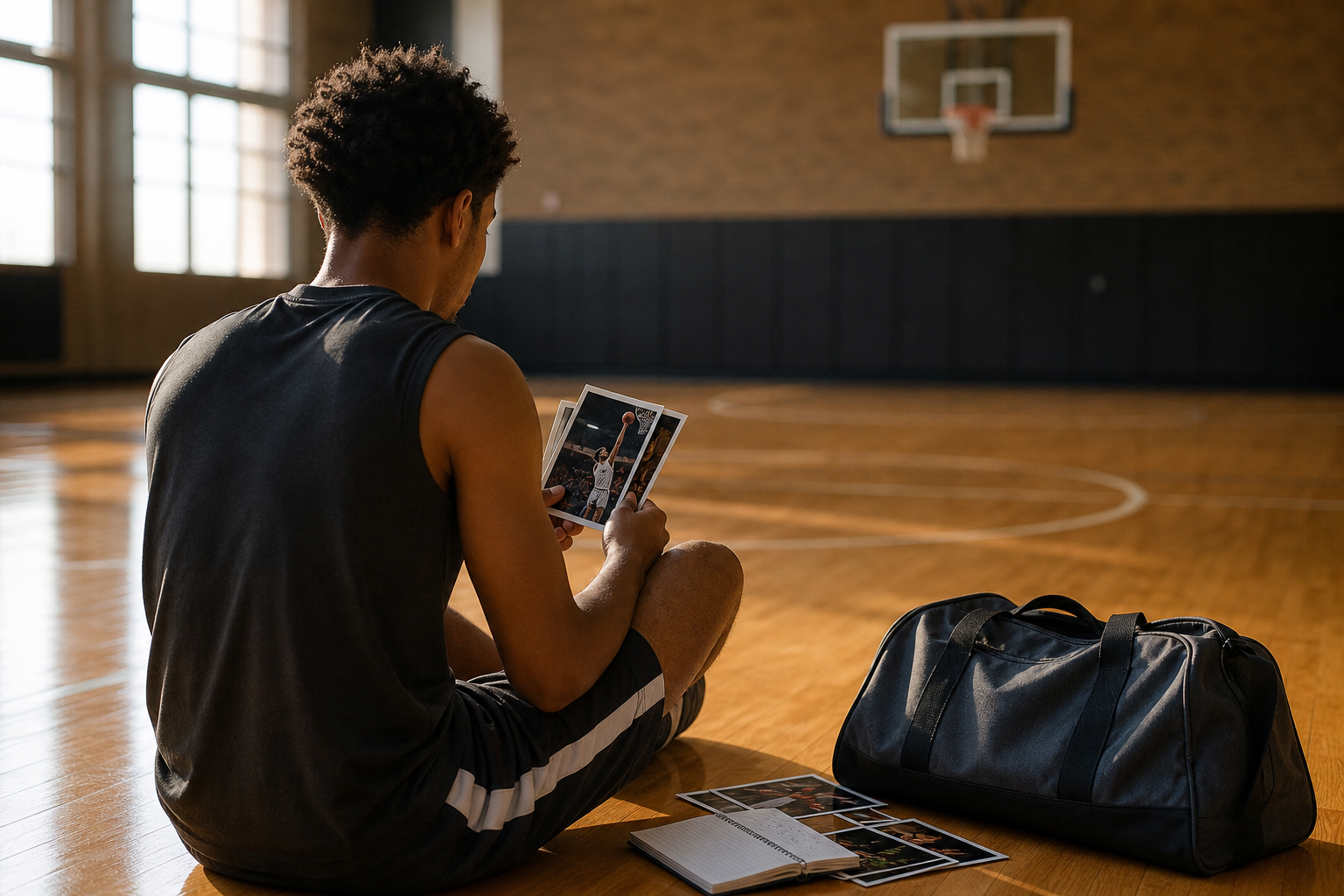
How to Keep a Personal Sports Photo Archive That Still Feels Like Yours
TL;DR: A useful sports photo archive is small, labeled, and chosen by the athlete—not a feed of every moment. Save a few images with enough context to remember the season, then leave the rest alone.
Direct answer
Keep a personal sports photo archive by choosing a limited set of images after each game or month, giving each one a plain-language label, and adding a short note about why it matters. The point is not to prove that every day was great or to publish a highlight reel. It is to make the season findable and recognizable later, on the athlete’s own terms.
That approach is deliberately modest. The Library of Congress recommends organizing personal digital files so they can be found and understood over time. The American Academy of Pediatrics also suggests that families choose a few photos that are meaningful rather than treating every image as something to post. Neither source is a rulebook for sports; together, they support a calmer question: what would you actually want to remember?
Why a camera roll is not an archive
A camera roll is excellent at collecting. It is not very good at returning a memory when you need one. Months later, dozens of nearly identical warm-up shots, screenshots, and blurry clips can make one season feel harder to revisit, not easier.
An archive does a different job. It gives a small number of moments enough context to survive the season: a date, an event, a place if it matters, and one sentence about the memory. That could be a photo of a muddy cleat after a first tournament, a team huddle from behind, a notebook page with a goal, or a quiet post-game image that marks a hard-earned reset. It does not need to be dramatic to be worth keeping.
For younger athletes, adults can help with the routine without taking ownership of the story. Offer a choice, ask what they want to save, and accept “none of these” as a real answer. A record that belongs to the athlete should not become another assignment.
Use the Three-Folder Season Archive
Try the Three-Folder Season Archive. It is designed to be easy enough to keep using when the schedule gets busy.
- Moments: Save no more than three to five images from a game, tournament, or month. Choose moments that tell a different part of the experience: arrival, effort, teammate connection, a learning moment, or the trip home.
- Context: Give each saved item a simple name such as 2026-08-29_first-tournament_arrival.jpg. Add a brief note in the photo description, a notes app, or a companion document: what happened and why this one stayed.
- Keep: At the end of the season, choose a smaller final set. The rest can remain in the camera roll or be deleted if that feels right. The archive is the edited collection, not an obligation to preserve everything forever.
Plain labels matter because they make later searching possible. The Library of Congress’s personal-digital-archiving guidance emphasizes knowing what files you have and organizing them so they remain accessible. You do not need a complicated naming system; date + event + a few real words is enough.
Choose for meaning, not for performance
A sports archive can accidentally become a scoreboard if every saved image has to show a win, a medal, or a perfect play. Give the collection a wider job. A season includes preparation, friendships, travel, learning a role, returning after a difficult game, and ordinary rituals that disappear quickly once the schedule changes.
One useful prompt is: “Would I want to explain this photo to myself next year?” If the answer is yes, it belongs in the maybe pile. Another is: “Does this show something the box score cannot?” That question makes room for a taped wrist, a volunteer table, a team bus window, or the first page of a practice notebook.
This is not an argument against action photos or celebrations. Those may belong too. It is a way to avoid making the archive dependent on a single definition of a good game.
Make the review short enough to repeat
Do not wait until the final week of the season to sort thousands of files. Set a 10-minute review after a tournament weekend or at the end of each month. Pick the few keepers, label them, add one note, and stop.
If the athlete does not want to review photos that day, leave it. The system should serve the person, not the other way around. A parent or teammate can create a shared album for logistics, but the personal archive can remain a separate, athlete-chosen collection.
It also helps to separate selection from sharing. Saving an image does not require posting it. The AAP’s family media-literacy guidance encourages families to select a few special photos and make intentional choices about them. In sports, that same distinction can reduce the pressure to turn every memory into public content.
A small end-of-season check
When the season finishes, open the archive and answer four questions:
- Which image best captures what I enjoyed?
- Which image shows something I learned or worked through?
- Which image would I show a future teammate or teammate’s family to explain this season?
- What is one moment I do not need to keep?
The last question is useful. Editing is part of ownership. A personal record can be honest without being exhaustive.
Related reading
If you want to build beyond photos, read What Makes a Season Record Useful After the Final Game?, How to Keep a Practice Notebook That Helps You Remember What You’re Learning, and How to Organize Athlete Highlights Without Turning a Profile Into a Clip Dump.
Sources
- Library of Congress, Personal Digital Archiving — United States public-institution guidance, accessed 2026; general preservation and organization guidance, not sports-specific research.
- American Academy of Pediatrics / HealthyChildren.org, “Media Literacy Activities for Kids & Families” — United States family guidance, accessed 2026; recommends intentionally selecting special family photos, not a study of youth-sports outcomes.
Frequently asked questions
How many sports photos should I keep from a season?
There is no required number. Start with three to five per event or month, then make a smaller final selection. The archive works when it remains easy to revisit.
Do all the photos need to be action shots?
No. Preparation, team rituals, travel, equipment, and a post-game note can carry context that an action shot cannot.
Should an athlete post every photo they save?
No. Saving and sharing are separate choices. A personal archive can stay private or be shared selectively.
What should I name the files?
Use a date, event, and short description. A format such as YYYY-MM-DD_event_moment makes later searching simpler.
What if an athlete does not want a photo archive?
That is fine. A season record can be a notebook, a few saved messages, a schedule with notes, or nothing at all. Ownership includes choosing not to document every experience.
Key takeaways
- A camera roll collects; a personal archive helps a season stay findable and meaningful.
- Choose a small number of images and add simple context while the memory is fresh.
- Save moments that show more than performance, including learning and ordinary team rituals.
- Keep selection separate from sharing so the archive does not become a public-content obligation.
- Let the athlete decide what belongs in the record and what does not.