
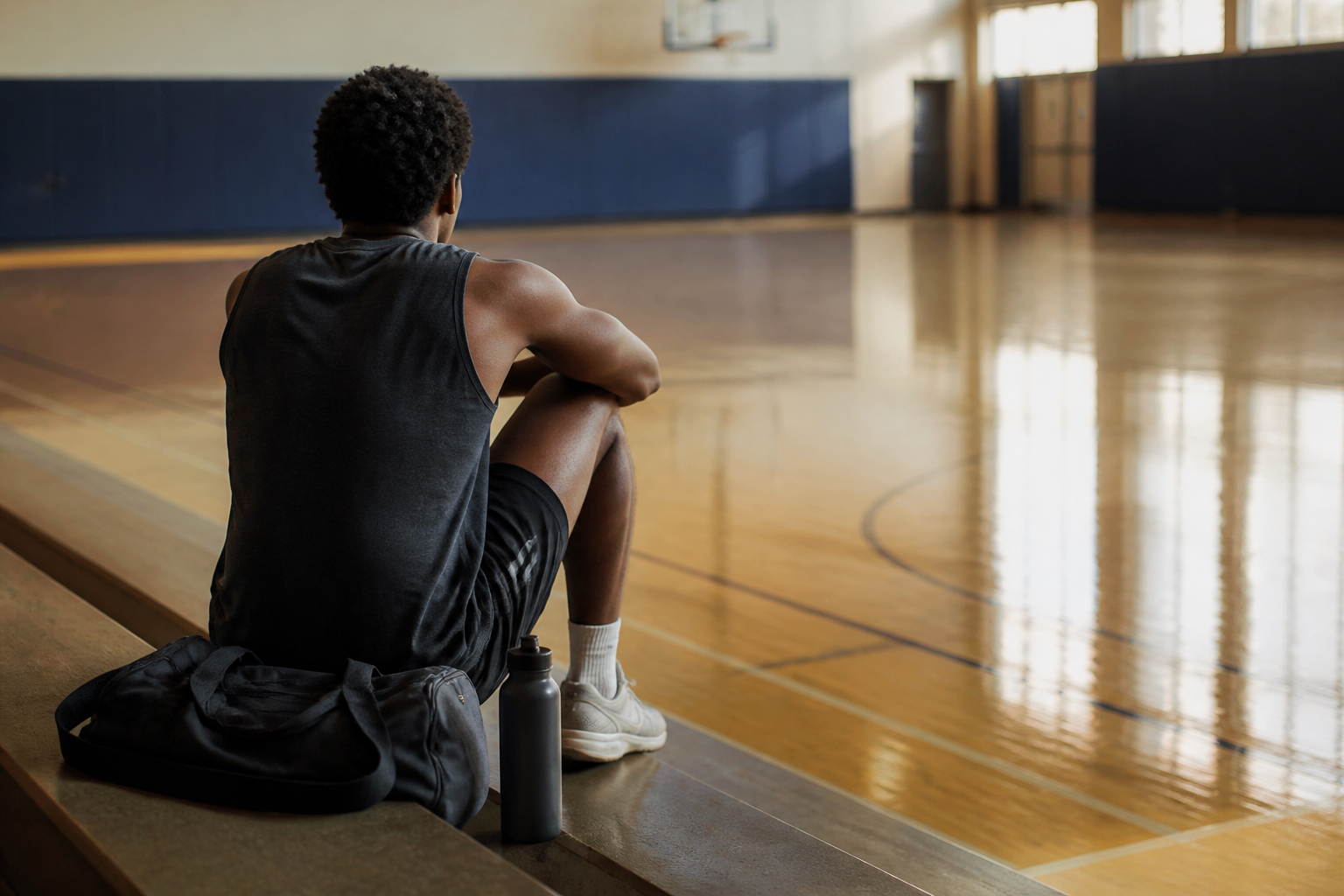
How to Keep Sport in Its Place Without Caring Less About It
TL;DR: Caring about a sport and being consumed by every result are not the same thing. A useful reset separates what happened in the game, what can be learned from it, and the person who played it.
Direct answer
Sport can matter a great deal without becoming the only measure of a young athlete. After a hard practice, a loss, a mistake, or a great game, name the event accurately, choose one next action, and return attention to the rest of life. That protects room for learning without asking anyone to care less.
Why this distinction matters
A close game can feel enormous. So can a missed shot, a lineup decision, a personal best, or a tournament weekend that took months to prepare for. The feeling is real. The problem starts when a result quietly turns into a label: I played badly becomes I am bad; we won becomes I matter more today.
The American Academy of Pediatrics’ HealthyChildren guidance encourages adults to affirm all parts of a child’s identity and reminds families that self-worth does not come from sport performance. That is family guidance, not a promise that one conversation removes pressure. It is still a helpful standard for the words around a season: performance is information, not a verdict on a person.
Keeping sport in proportion does not mean pretending results do not matter. It means giving results their proper job. A result can show what happened on one day. It can point to a skill worth practicing. It cannot, by itself, explain someone’s character, potential, friendships, curiosity, or place on a team.
The Game–Lesson–Person reset
Use this three-part reset after any moment that feels bigger than it should.
1. Name the game
Stick to something a camera, scoresheet, or notebook could show: “We lost by four.” “I turned the ball over twice late.” “I kept my pace through the last shift.” Avoid turning a vague feeling into a global judgment.
2. Choose the lesson
Pick one controllable next step. It might be asking a coach for one cue, practicing a specific skill, arriving ready for the next session, or simply resting and returning tomorrow. One honest action is more useful than a long post-game autopsy.
3. Protect the person
End with something that does not depend on the scoreboard. Call a friend. Eat dinner with family. Read, draw, play another sport, or talk about something unrelated. The point is not distraction for its own sake. It is evidence that sport belongs in a full life.
What adults can say without making the moment smaller
“It is not a big deal” can land poorly when an athlete has worked hard. Try language that respects the feeling while leaving room to move:
- “That looked frustrating. What part do you want to talk about?”
- “What is one thing you want to carry into the next practice?”
- “You do not have to solve the whole season tonight.”
- “I like watching you play. I also like who you are when we are not at the field.”
These are conversation starters, not scripts that fit every family. Listen first. Some athletes want to talk immediately; others need a quieter ride home. The useful boundary is simple: do not turn one performance into a character review.
Build a season record that has more than results
A season becomes easier to hold in proportion when its record includes more than scores, placements, and clips. Once a week, an athlete can save a small note under three headings: something I learned, something I enjoyed, and something I want to try next. A photo, schedule, or short recap can add context, but none of it needs to become public content.
That practice pairs well with a personal season review that does not turn into a grade. Families who want to preserve a few memories can also use this guide to a personal sports photo archive. The aim in both cases is a record that helps someone remember growth and enjoyment, not a scrapbook that has to prove worth.
When the culture around sport gets too narrow
Young athletes notice what adults celebrate. If every conversation returns to playing time, rankings, scholarships, or the next result, sport can start to feel like a permanent audition. Make room for other questions: Did the team show up for each other? Did someone try a new role? What was funny? What did the athlete notice about the game? What will they remember next month?
There is no need to manufacture a silver lining after every loss. Honest disappointment belongs in sport. The goal is to make sure disappointment has a boundary. For a related reset, read how to keep youth sports fun when results matter.
A small plan for the next hard day
- Wait until emotions settle enough for a real conversation.
- Describe one fact from the game or practice.
- Choose one next action—or decide that rest is the next action.
- Do one ordinary, non-sport thing before the day ends.
- Save only the season detail that will still be useful later.
This is not a system for lowering standards. It is a way to keep standards connected to learning rather than identity.
Sources and context
- American Academy of Pediatrics, HealthyChildren: “3 Mental Skills Children Need for Sports” — United States family guidance, accessed August 2026. It advises caregivers to affirm all aspects of a child’s identity and says self-worth does not come from sport performance. This is practical guidance, not a clinical assessment or outcome study.
- American Academy of Pediatrics, HealthyChildren: “Parenting an Athlete” — United States family guidance, accessed August 2026. It recommends communication about a child’s desires and a sense of self-worth not dependent on sport or achievement. It does not prescribe a universal family approach.
Frequently asked questions
Does caring less about a result make an athlete less competitive?
No. The point is not to lower care or effort. It is to keep one result from becoming a judgment about the whole person, so the next step can stay specific and useful.
What should an athlete do right after a hard game?
Start with one accurate fact, then choose one next action or decide to rest. A full post-game evaluation can wait until emotions are less intense.
How can parents support an athlete without giving a speech?
Ask whether they want to talk, listen to the answer, and avoid turning the car ride home into a performance review. A short, sincere question is often enough.
Should every season moment be saved or posted?
No. Keep a few details that help the athlete remember what mattered. A personal record can be useful without becoming a public feed.
Key takeaways
- A game result is information about a moment, not a verdict on a young athlete.
- The Game–Lesson–Person reset turns emotion into one practical next step.
- Adults can respect disappointment without making sport the only topic that matters.
- A season record is stronger when it includes learning and enjoyment alongside results.