
Three Questions Coaches Can Ask Before the First Practice
TL;DR
Before the first practice, ask athletes three short questions: What are you hoping to get better at? What helps you feel ready to take part?
and How can you help this team? The point is not to collect perfect answers or make promises. It is to learn names, reduce guesswork, and give every athlete an early way into the group.
New teams often begin with the practical stuff: times, drills, rules, and equipment. That matters. But a coach can also make room for a few answers that change how the first few weeks feel. A young athlete who has a simple chance to speak is not guaranteed confidence or belonging. Still, the coach has better context than they would get from a roster alone.
Why ask before the first practice gets busy?
The opening minutes of a season tend to move fast. Players are finding their space, families are sorting logistics, and coaches are trying to get everyone started. That is exactly why a long speech or a detailed survey usually misses the moment.
A better approach is a brief listening routine: ask one question, accept a short answer, and move on. The Aspen Institute’s Project Play describes effective youth-sports coaching as knowing each athlete’s story, building a supportive team culture, and celebrating effort, autonomy, and learning. That is useful direction—not a script and not proof that three questions will solve a team problem.
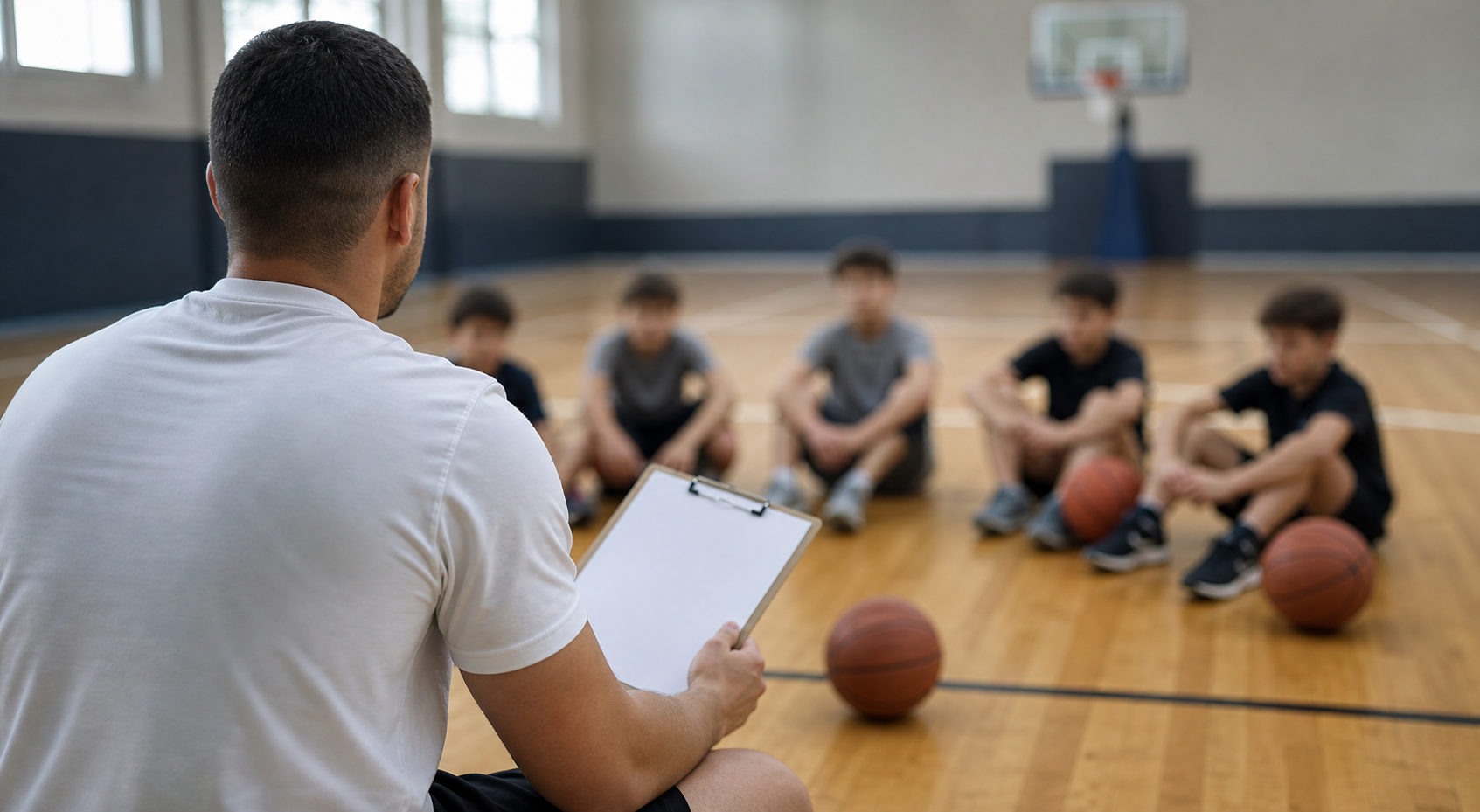
The questions below work best in a low-pressure setting: a circle before the first drill, a paired conversation, or a written option for athletes who would rather not speak to the full group. Keep it voluntary. Do not ask athletes to share personal, medical, family, or other sensitive information.
The First-Practice Three
1. What are you hoping to get better at this season?
This gives athletes a way to name an interest without being judged on whether it sounds ambitious. Answers can be specific—using a non-dominant hand or calling for the ball—or broad—feeling more confident. The coach does not need to turn every answer into an individual promise. The useful move is to hear the pattern and build a few practice moments where different kinds of progress can be noticed.
2. What helps you feel ready to take part?
Some athletes want to see a demonstration first. Some prefer a quick partner rep before a full-group drill. Others want to know the order of practice. This question is not a diagnosis and it should not become public labeling. It is a practical prompt for better coaching choices: explain the next activity clearly, create a low-stakes first rep, and leave room for athletes to ask for clarification.
3. How can you help this team?
This shifts the conversation away from who will score most or start first. An athlete might name communication, encouragement, equipment setup, focus in warmups, or being a good listener. These are not permanent roles. They are small, observable ways to contribute. A coach can return to them later by noticing real actions rather than handing out vague praise.
Use a simple listen-to-action loop
The questions are only useful if they lead to one visible choice. Try this four-step loop:
- Ask: give athletes a short prompt and a genuine option to pass.
- Notice: look for themes, not a ranking of the best answers.
- Act: make one small practice adjustment, such as a clearer demo, paired warmup, or rotating helper task.
- Return: after a few practices, ask what is helping and what needs to change.
This is the Listen-to-Action Loop. It keeps the first-practice conversation connected to something athletes can see. It also protects against a common mistake: asking for input, then disappearing into the plan without acknowledging it.
Keep the answers useful, not heavy
First-practice questions should create an opening, not demand disclosure. A coach does not need an athlete’s full story to coach with care. Avoid putting athletes on the spot with questions about why they are nervous, what is happening at home, injuries, medical details, or personal conflict. If an athlete or family raises a concern, handle it privately through the team’s established process rather than in a group discussion.
Also avoid converting answers into promises about playing time, positions, results, or recognition. The honest commitment is smaller: the coach will listen, make reasonable adjustments when possible, and explain team expectations clearly.
A five-minute format coaches can repeat
At the first practice, spend five minutes on the routine:
- One minute: explain that short answers and passing are both fine.
- Two minutes: let athletes think, write, or talk with a partner.
- One minute: invite a few volunteers to share.
- One minute: name one team theme you heard and the next practical step.
For example: “I heard a lot of people want clearer communication and a chance to try new things. Today we will use partner reps before the full drill, and we will practice calling for support.” That is specific enough to matter and modest enough to keep.
Where OVR fits
For a team that wants one reliable season record, a short team note can capture the shared goals and the routine the group chose. In OVR’s Team OS, calendars, team channels, highlights, and team workspaces are designed to keep operational context connected. Keep any athlete-specific notes appropriate to the team’s permissions and privacy expectations; a public profile is not the place for private first-practice responses.
Related reading
- How Often Should a Coach Check In During Training?
- How to Build a Team Tradition That Does Not Depend on Winning
- How to Welcome New Families to a Sports Team Without Overloading Them
Frequently asked questions
Should every athlete answer out loud?
No. Offer a pass, a written response, or a partner option. The purpose is to open communication, not to test who is comfortable speaking in front of the team.
What if an athlete gives a very short answer?
Accept it. A short answer is still information, and pushing for more can turn a useful check-in into pressure. Coaches can build trust through consistent follow-up over time.
Should these questions be asked before every practice?
Not necessarily. Use them at the start of a season, after a meaningful change, or when the group needs a reset. Shorter check-ins can follow once a routine is established.
Can a coach promise that every request will be met?
No. A coach can promise to listen and be clear about what the team can do. Playing time, positions, results, and individual outcomes should not be promised through a first-practice conversation.
Source and context
Aspen Institute Project Play, “Why good coaches matter” (United States, 2022). This nonprofit youth-sports resource highlights knowing athletes’ stories, supportive team culture, and effort, autonomy, and learning. It is guidance for coaching culture; it does not study or validate this exact three-question format.
Key takeaways
- Why ask before the first practice gets busy?
- The First-Practice Three
- 1. What are you hoping to get better at this season?
- 2. What helps you feel ready to take part?
- 3. How can you help this team?