
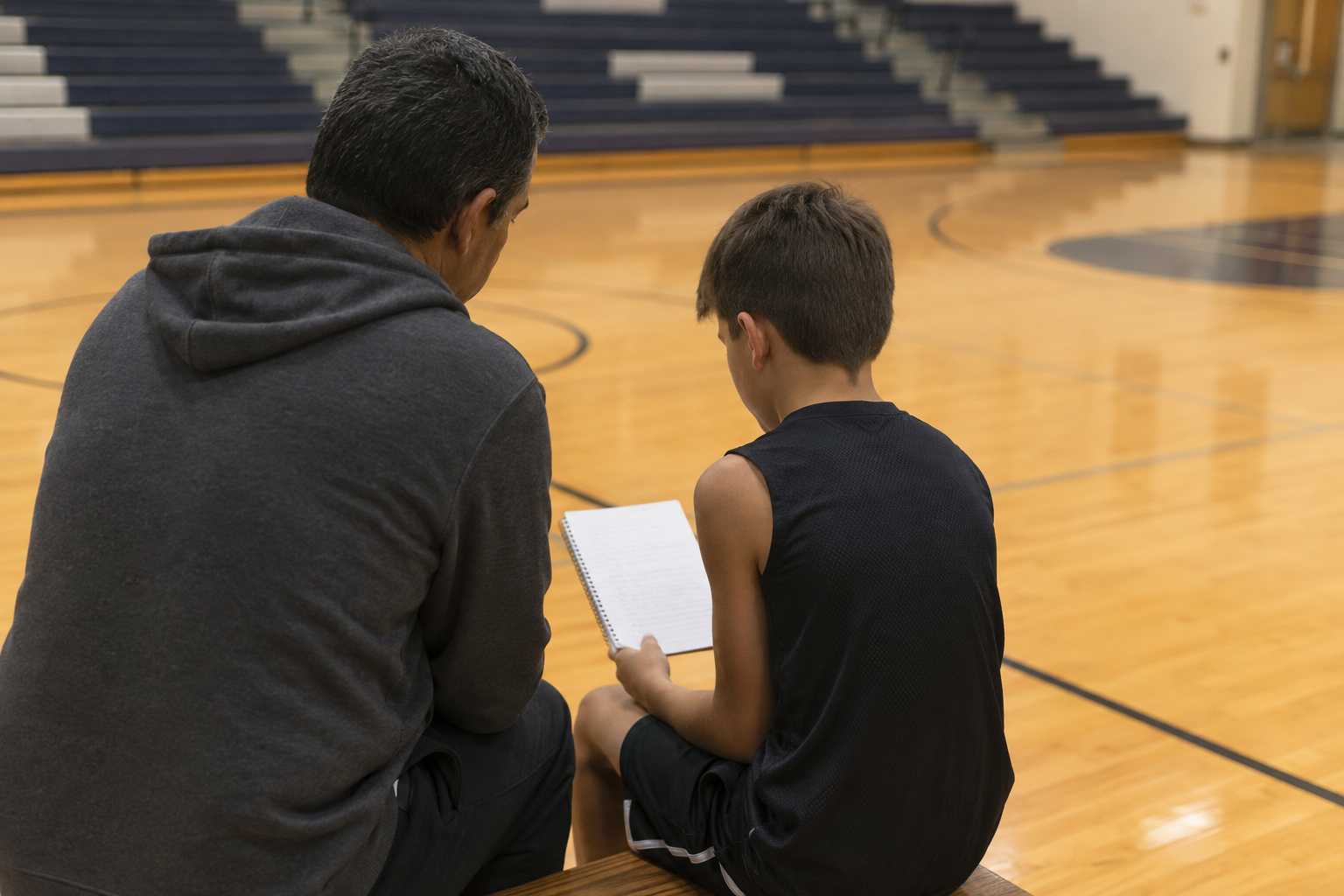
How Parents Can Help a Young Athlete Bring a Question to Practice
TL;DR: Help an athlete name one specific thing they want to understand, then let them choose whether and how to raise it. The parent’s job is to make the question easier to carry—not to take over the conversation.
Direct answer
A young athlete is more likely to get a useful answer at practice when they arrive with one short, concrete question about a skill, role, or next step. A parent can help by listening, narrowing the concern, rehearsing a respectful opener, and respecting the team’s normal communication process. That keeps the athlete at the center while adults remain available for adult responsibilities.
Not every uneasy ride home needs a meeting, a message, or a solution before the next practice. Sometimes an athlete does not need an adult to interpret every moment; they need a little help turning “I don’t get it” into a question they can actually ask.
Start by separating a feeling from a question
“Coach never tells me anything” is a real feeling, but it is hard for anyone to answer. Start there without correcting it. Then ask what happened that made the athlete say it. Was there a drill they did not understand? A position change? A piece of feedback that went by too fast?
The goal is not to cross-examine the athlete or decide whether the coach was right. It is to find the smallest useful question inside the bigger frustration. For example:
- “What should I focus on when I am playing this position?”
- “Can you show me where you want me to start in that drill?”
- “What is one thing I can practice before next week?”
Each question points toward learning. None asks the athlete to argue a result, compare themselves with a teammate, or make a parent’s concern sound like their own.
Use the One-Question Practice
The One-Question Practice is a simple four-step reset for a parent and athlete before the next session:
- Name the moment. Describe one drill, instruction, or situation—not the entire season.
- Name the gap. Finish the sentence: “I am not sure how to…” or “I want to understand…”
- Make it askable. Turn the gap into one short question that a coach could answer between drills or after practice.
- Choose the route. Decide whether the athlete can ask in person at the appropriate time, needs to wait for a team-designated channel, or needs an adult to handle an adult matter.
This is deliberately small. One clear question is easier to remember than a speech, and it gives the athlete a chance to practice self-advocacy without making practice feel like a formal hearing.
Keep the question about learning, not a verdict
A useful practice question seeks information. It does not ask a coach to defend every choice. “What can I work on to earn more time in this drill?” invites a next step. “Why do you always pick them?” usually pulls the conversation toward comparison and frustration.
That distinction matters for parents too. The American Academy of Pediatrics has encouraged parents to keep their support general and positive and to ask programs about appropriate communication between coach and athlete. Its guidance is about healthy organized-sport environments; it is not proof that any particular conversation will change an athlete’s role or result.
Try a plain test before suggesting a question: Will this help the athlete understand what to do next? If yes, it is probably ready. If it asks someone to predict, rank, blame, or guarantee, bring it back to the next learnable action.
Respect the team’s communication boundaries
Different organizations have different expectations for when questions belong at practice, after practice, through a team channel, or with a parent present. Follow those expectations. For youth sport, communication should also follow the organization’s safeguarding rules and any parent/guardian visibility requirements.
This is not a reason to silence an athlete. It is a reason to choose an appropriate route. A question about how to perform a drill may fit a brief in-person moment. A concern about safety, conduct, access, or an adult responsibility belongs with the appropriate adult and the organization’s established process. When the issue is urgent or involves safety, skip the rehearsal and use the organization’s reporting or safeguarding route.
What a parent can say without scripting the athlete
Parents can make room for the athlete’s voice with a few low-pressure prompts:
- “What part do you want to understand better?”
- “What is one question that would help at the next practice?”
- “Do you want to practice saying it once, or would you rather keep it in your notebook?”
- “Who is the right person and time to ask?”
Notice what these prompts do not do: they do not promise an answer, tell the athlete what to feel, or turn the parent into a messenger by default. If the athlete decides not to ask after thinking it through, that can still be useful information. The purpose is to give them a workable option, not to force a conversation.
Make a small record after practice
After practice, return to the original question for two minutes. Did the athlete ask it? What did they hear? What is one thing they want to try next? A short note is enough. It helps separate a real instruction from the blur of a busy practice.
That record is for learning, not for building a case against anyone or grading the athlete’s progress. If an athlete chooses to keep personal season notes, a simple practice notebook can hold the question, answer, and next action in one place. For a broader parent perspective, read how parents can let young athletes own more of their sports experience.
Where OVR fits
This is a Jab, not a product workflow. The useful outcome is an athlete-owned question and a calmer next step whether or not they use OVR. When an athlete or family wants to keep selected season context together, OVR’s profile and activity surfaces are designed to connect identity, achievements, and season stories—but no profile should replace a team’s communication or safeguarding process.
Frequently asked questions
What if my child is too nervous to ask a question at practice?
Start smaller: help them write the question, practice it once at home, or identify a calmer moment after practice. Do not force the exchange. If the question concerns safety or an adult responsibility, use the organization’s appropriate adult channel instead.
Should a parent contact the coach instead?
For a skill or instruction question, first consider whether the athlete can ask through the team’s normal process. Parents should handle adult matters and follow the organization’s communication rules. Safety, conduct, access, or safeguarding concerns should go through the relevant adult or formal route.
What makes a question useful?
A useful question is specific, connected to a recent moment, and focused on what the athlete can understand or try next. It does not ask for a ranking, a guarantee, or a comparison with another athlete.
When is the best time to ask?
Use the time and channel the team has established. A brief question after a drill may work in some settings; in others, athletes may be asked to wait until after practice or use a designated channel.
Sources and context
- American Academy of Pediatrics / HealthyChildren, “AAP Encourages Organized Sports – For the Fun of It” (United States, 2019). This AAP guidance supports the article’s limited points about general positive parent support and asking programs about coach-athlete communication; it is not an outcome study or a guarantee about a particular team conversation.
- Aspen Institute Project Play, “Youth Sports Resources for Parents” (United States, accessed September 2026). This nonprofit resource directory highlights athlete-centered support and open communication; it is practical guidance, not causal research.
Key takeaways
- Turn a broad frustration into one question about a recent, specific moment.
- Keep the question focused on understanding and the next action, not a verdict or comparison.
- Let the athlete choose an appropriate way to ask while adults handle adult responsibilities.
- Follow team communication and safeguarding expectations.
- Use a short post-practice note to carry one lesson forward.