
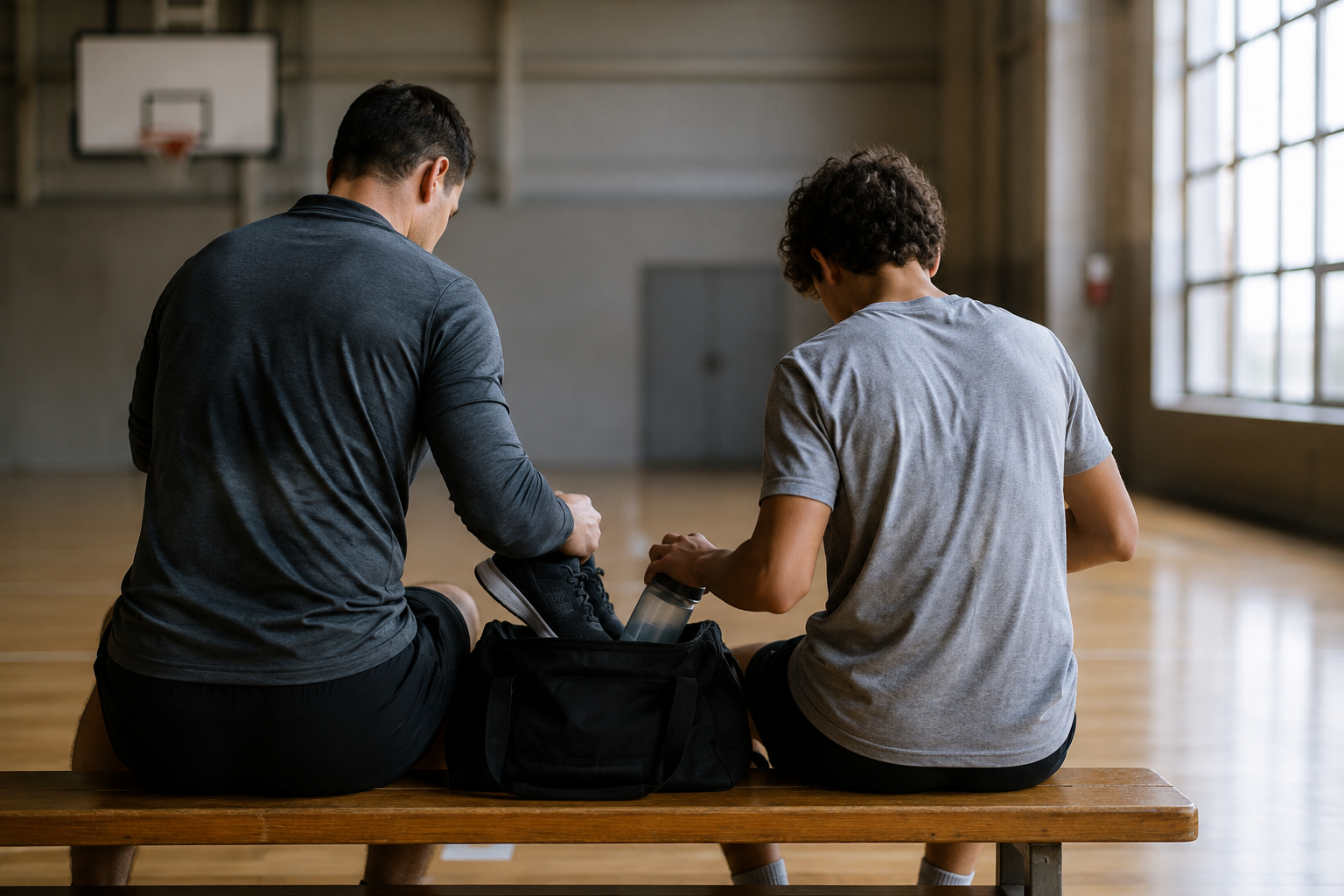
How Parents Can Let Young Athletes Own More of Their Sports Experience
TL;DR: Young athletes can own more of sport when adults hand over one clear, age-appropriate responsibility at a time and stay available for the parts that still belong to adults. The goal is not independence overnight; it is a steadier habit of preparation, communication, and reflection.
Direct answer
Start by choosing one part of the sports routine your child can reliably lead: packing their gear, checking the next start time with you, sending a respectful availability update with help, or naming one thing they want to work on. Keep safety, transportation, payments, and adult-facing decisions with adults. Then review what worked before adding another responsibility.
Parents often carry the whole sports routine because it is faster. You remember the water bottle, read the schedule update, find the jersey, and start the post-game conversation. That can be necessary, especially with younger children. But a season also gives a young athlete repeated chances to practice ownership in small, low-stakes ways.
The useful question is not “Should my child be responsible for everything?” It is “What is the next responsibility they can practice without being set up to fail?”
The supported-handoff approach
The American Academy of Pediatrics’ parent guidance encourages adults to let children take some responsibility for their sport without overwhelming them. That is a helpful middle ground: ownership is learned through supported repetition, not by stepping away completely.
Use this three-part handoff:
- Name the job. Make it concrete: “You are in charge of putting your shoes, water bottle, and jersey by the door.”
- Keep the boundary. An adult still owns safety, transport, fees, medical decisions, and any communication that requires an adult.
- Review, don’t rescue silently. If something is missed, talk through the next system instead of quietly rebuilding the whole routine forever.
This is not a test of maturity. It is a way to make the routine visible enough to practice.
Choose the right first responsibility
The first job should be small, observable, and repeated often. A vague instruction such as “be more responsible” gives no one a clear finish line. A useful first job has a beginning, an end, and a chance to try again next week.
Good first jobs
- Put required gear in one designated place before leaving home.
- Check the family calendar with an adult and repeat back the next practice or game time.
- Keep a personal list of equipment that needs to come home after a game.
- Choose one personal goal for practice, such as communicating, learning a rule, or trying a new movement.
- Save one photo, note, or memory from the week and say why it mattered.
These tasks work because they are about preparation and reflection, not about results. A child does not need to score, start, or win to complete them well.
Jobs that usually still need adult ownership
Adults should retain responsibilities that carry financial, safety, health, legal, or privacy consequences. That includes registration, payment decisions, transportation, emergency information, injury concerns, and decisions about what personal information is shared publicly. Older athletes may participate in those conversations, but participation is different from being asked to carry the risk.
A five-minute weekly check-in that does not become a lecture
Ownership grows when young athletes can notice their own experience. A short check-in is more useful than a long post-game debrief, especially when emotions are still high.
Try the Pack, Plan, Notice check-in once a week:
- Pack: What do you want to make sure is ready for the next session?
- Plan: What is one thing you want to remember or try?
- Notice: What felt easier, harder, or more interesting this week?
Let the athlete answer in their own words. The point is not to extract a polished lesson. It is to give them a regular place in the routine where their view matters.
Make the system easier than the reminder
If the routine depends on a parent remembering every detail, the child never gets a real chance to practice. Build a simple system instead: one gear spot, one shared calendar view, one written checklist, or one recurring Sunday reset. Use the smallest system that removes a predictable point of friction.
When something goes wrong, treat it as information. A forgotten water bottle may mean the gear spot is unclear, not that the athlete does not care. A missed time may mean the schedule changed in a place they cannot easily see. Adjust the system before turning the moment into a character judgment.
Keep the child’s voice in the decision
Project Play’s parent resources encourage families to ask children about their goals and preferences, then shape activities accordingly. That does not mean children make every scheduling or budget decision. It means their experience is part of the information adults use.
Questions that invite a useful answer include:
- What part of this sport do you want more of?
- What part feels rushed, confusing, or too much right now?
- What would make the next month feel more manageable?
- What is one responsibility you feel ready to try yourself?
A family may still decide that a commitment is not workable. Listening does not require saying yes. It does make the decision feel less like something happening around the athlete.
Related reading
- How Parents Can Help a Young Athlete Set a Season Goal Without Making It a Grade
- What Parents Should Save During a Sports Season Before It Disappears Into a Camera Roll
- How to Keep Sport in Its Place Without Caring Less About It
Sources and context
- American Academy of Pediatrics, “Parenting an Athlete” — United States; accessed September 2026. Parent-facing clinical guidance, not a study of sports outcomes.
- Aspen Institute Project Play, “Youth Sports Resources for Parents” — United States; accessed September 2026. Practical nonprofit resource, not a universal prescription for every family.
- Aspen Institute Project Play, “Ask Kids What They Want” — United States; accessed September 2026. Practical guidance on incorporating youth preferences; it does not replace adult responsibility for safety and logistics.
Frequently asked questions
What sports responsibilities can a young athlete handle?
Start with one repeatable task such as packing gear, checking the next event with an adult, or naming a personal practice focus. Keep the task small enough to learn and repeat.
Should a child manage their own sports schedule?
A shared view of the schedule can be a good learning tool, but adults should remain responsible for transport, safety, and final logistical decisions. The athlete can practice checking and confirming details.
What if my child keeps forgetting gear?
Make the routine easier to see: use one gear location and a short checklist. Review the miss together and change the setup before assuming the problem is motivation.
How do I give a young athlete more ownership without adding pressure?
Choose responsibilities about preparation and reflection rather than performance. Ask what they are ready to try, make the job clear, and treat mistakes as part of learning the routine.
Key takeaways
- Ownership works best when one clear, repeatable responsibility is handed over at a time.
- Adults should continue to own safety, transport, financial, health, and public-sharing decisions.
- The Pack, Plan, Notice check-in makes room for an athlete’s perspective without turning the conversation into a review.
- Simple systems such as a gear spot and shared calendar create more learning than repeated reminders.
- Listening to a child’s preferences can inform family decisions even when adults retain the final responsibility.