
TL;DR
Parents can help preserve a season by gathering a few dated items, asking simple questions, and letting the athlete decide what matters. The record should support memory and the next step—not become a scrapbook, ranking, or parent-written verdict.
Direct answer
The best parent role in a season record is organizer and listener, not editor-in-chief. Set aside a short time after the final game, collect only a few pieces of context, ask the athlete what they want to remember, and save their answer in their own words. Keep private material private unless the family and organization have chosen otherwise.
Why a parent-made archive can miss the point
Parents often hold the calendar, photos, messages, and practical memories of a season. That makes them well placed to help. It can also make it easy to build a record that reflects what adults noticed instead of what the athlete learned.
A season record is more useful when it can answer three questions later: What was the athlete working on? What moments mattered? What should carry forward? The answer does not need to be a highlight. It might be a new routine, a difficult adjustment, a teammate who helped, or a question to bring into the next season.
PHE America’s educator guidance on athlete reflection recommends directed prompts in a workout log or reflective journal. The practical lesson is modest: a few clear questions are more helpful than asking an athlete to produce a polished season summary on demand.
The Parent Support, Athlete Voice framework
1. Gather context, not a case for success
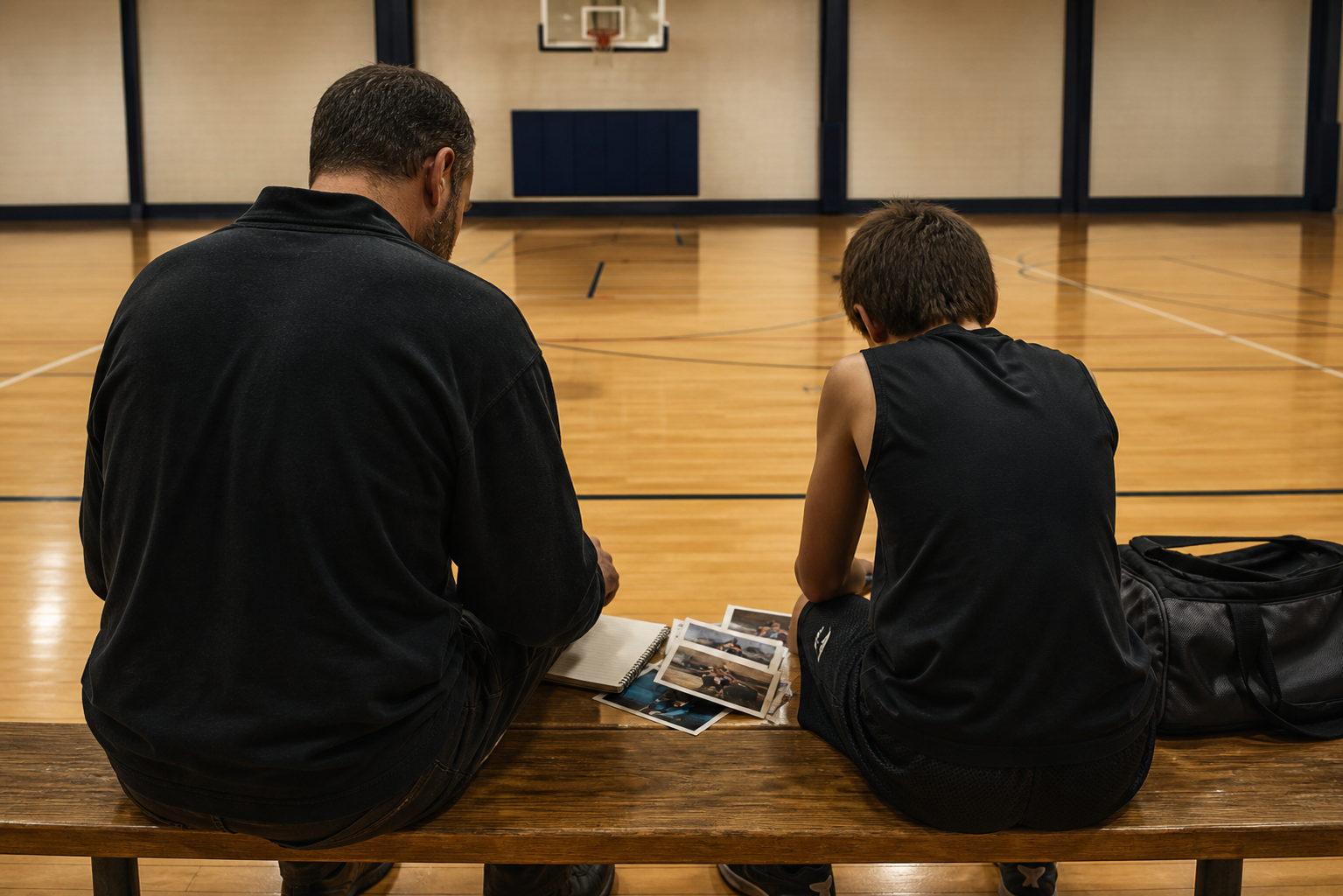
Bring together a schedule, a few photos or clips, a practice note, and any verified record that may matter. Choose a small set. More files do not automatically create a better memory.
2. Ask before you label
Try: “What do you want to remember from this season?” “What became easier?” “What was harder than you expected?” “What do you want to try next?” Let the athlete answer before adding an adult interpretation.
3. Keep the athlete’s words
Save one or two answers in the athlete’s own language. A short note is enough. This prevents a season record from becoming a parent report card.
4. Make one carry-forward note
End with one practical next step: keep a routine, ask a question, practice a skill, or simply take a break before the next season. The note should be within the athlete’s control.
What belongs in a useful season record
A useful record is selective. Include the season dates and sport context, two or three labeled moments, and one next-step note. A photo or clip needs a date and a sentence explaining why it is there. Statistics can be included when they are verified and useful, but they are not the whole story.
The Library of Congress’s Personal Digital Archiving program advises people to identify what they have, organize it, make copies, and plan for ongoing access. This is general preservation guidance, not youth-sport outcome research. Still, it is a sound reminder to name files clearly and keep a backup rather than letting an entire season live only in one camera roll.
Keep reflection separate from evaluation
A hard season can still leave a good record. Avoid using the final-week conversation to settle playing-time questions, compare athletes, or decide whether the season was “worth it.” Those are different conversations and may need more time, more context, or an appropriate adult process.
For younger athletes, drawing, a voice note captured with permission, or one sentence can work better than a long written reflection. Parents can offer structure without requiring public sharing. If anything may be posted or sent outside the family, pause and follow the expectations that apply to the athlete, family, and organization. This is general choice-and-context guidance, not legal advice.
A 15-minute final-week routine
- Five minutes: gather a small set of labeled items.
- Five minutes: ask the four framework questions and listen.
- Three minutes: choose two moments and one carry-forward note.
- Two minutes: save the record and make a backup.
Stop there. A brief record that the athlete recognizes is more valuable than an elaborate recap that never gets revisited.
Related reading
- What Parents Should Save During a Sports Season Before It Disappears Into a Camera Roll
- How to Document Athletic Progress Without Turning Every Practice Into Content
- What to Say to a Young Athlete After a Game: A Parent’s 3-Question Reset
Sources and context
- PHE America, “Teaching Athletes to Reflect” (2020) — U.S. professional association educator guidance on directed reflection prompts; not an outcome study.
- Library of Congress, Personal Digital Archiving — U.S. public-institution preservation guidance; not sport-specific research.
Frequently asked questions
Should a parent write the season record?
A parent can organize materials and capture an answer, but the athlete should have room to choose the moments and language that matter.
Do we need to include every photo or game?
No. A small, labeled selection is easier to revisit and more likely to preserve useful context.
Should statistics be included?
They can be included when verified and meaningful, with dates and competition context. They should not replace the athlete’s own reflection.
Does a season record need to be public?
No. It can remain entirely private. Sharing is a separate choice.
What if the athlete does not want to talk?
Respect that. Offer a later moment, a drawing, a voice note, or a single prompt instead of forcing a full debrief.
Key takeaways
- Parents can supply organization without taking ownership of the story.
- Short, directed questions make reflection easier.
- Save a few labeled items rather than every file from the season.
- Keep reflection separate from comparison and evaluation.
- End with one athlete-owned next step.