
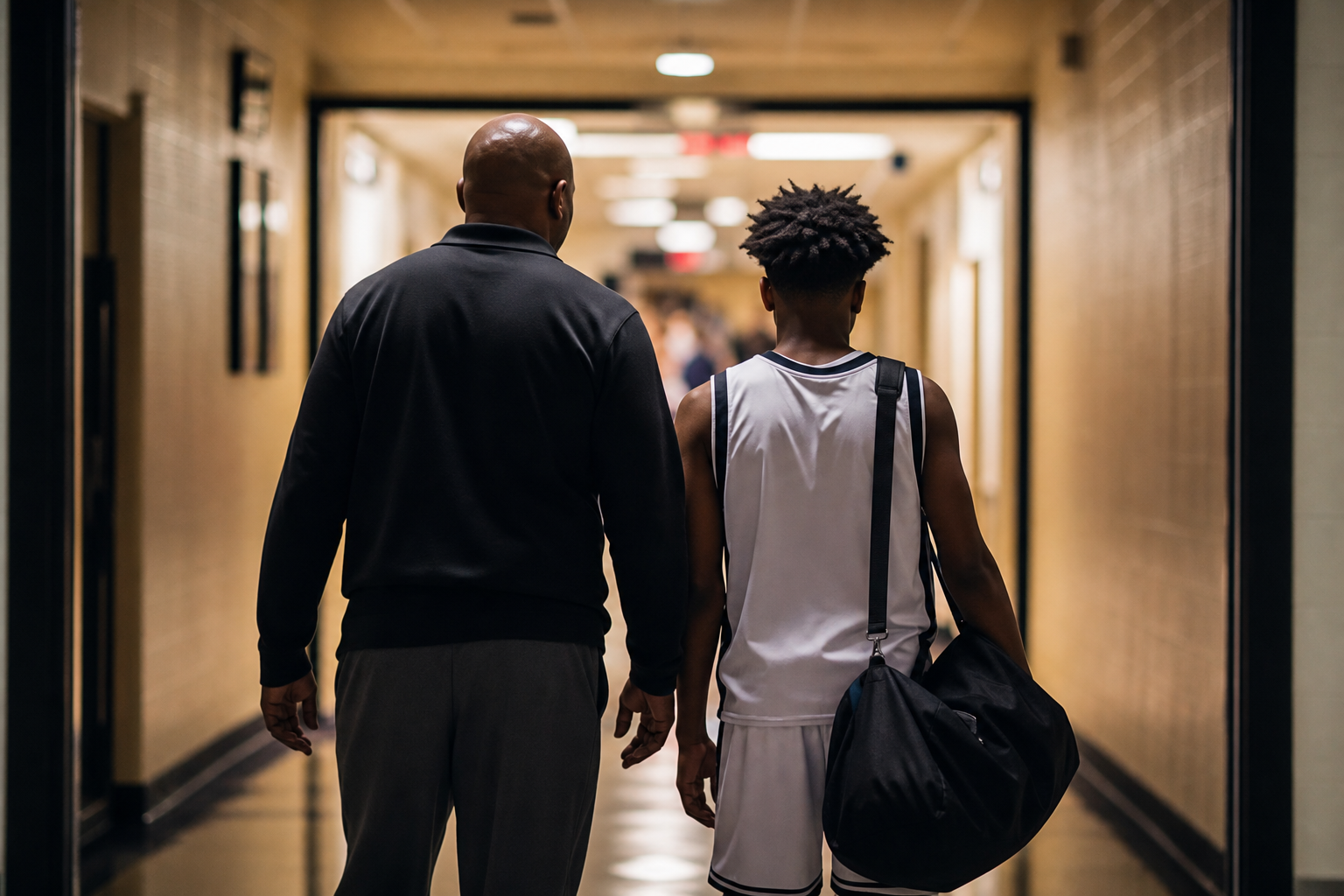
What to Say to a Young Athlete After a Game: A Parent’s 3-Question Reset
TL;DR
After a youth sports game, start by reconnecting rather than reviewing. A useful first conversation is short: How are you feeling?
What part did you enjoy or notice? Do you want to talk about the game now, later, or not at all? Those questions give a young athlete room to own the experience before an adult adds analysis.
The ride home does not have to carry the whole lesson from a game. It can simply be the place where an athlete knows that one result does not change how they are seen.
Why the first minute matters
A parent may have watched every missed chance, close call, or difficult shift. The athlete may be replaying something completely different: a new teammate, a funny moment, a small improvement, or the relief that the game is over. Beginning with a verdict can close the conversation before those perspectives meet.
Positive Coaching Alliance advises parents and caregivers to resist the temptation to critique immediately after a game and to use open-ended questions that invite a longer response. That is practical communication guidance, not a guarantee about performance or confidence. Source: Positive Coaching Alliance, “Ten Tips for First-Time Sports Parents/Caregivers” (United States; nonprofit practical guidance; accessed August 2026).
There is no perfect sentence for every athlete. The goal is more modest: make the first exchange safe enough that they can decide whether they want to keep talking.
The Three-Question Reset
Use this sequence after a game, especially when emotions are still high. It takes less than a minute and works better as an invitation than a script to deliver word for word.
1. “How are you feeling?”
This question makes room for the human answer before the sports answer. “Tired,” “frustrated,” “fine,” and “hungry” all count. Do not interrogate a short response. A quiet athlete may need food, a shower, or a little distance more than a conversation.
2. “What part did you enjoy or notice?”
Keep the question broad. It does not assume the game went well, and it does not demand a highlight. An athlete may name a teammate’s play, a new skill they tried, a hard matchup, or nothing at all. Their answer tells you what they are ready to discuss.
3. “Do you want to talk about the game now, later, or not at all?”
This is the release valve. It gives the athlete a real choice without suggesting that discussion is forbidden. If they choose later, follow through: revisit it gently when the mood has changed, rather than treating the delay as avoidance.
What this reset is—and is not
The reset is not a way to avoid standards, skip a coach’s feedback, or pretend hard moments do not matter. It separates support from analysis. Parents and caregivers can be the steady relationship that helps an athlete process a game; coaches can handle sport-specific instruction in the appropriate setting.
If an athlete brings up a concern about safety, bullying, harassment, or their wellbeing, listen carefully and use the organization’s established reporting or support process. A post-game conversation is not the place to diagnose or resolve serious concerns on the spot.
Choose one follow-up, not five
When an athlete does want to talk, choose the follow-up that matches what they shared. Stacking questions can turn interest into an audit.
- If they name a good moment: “What made that feel good?”
- If they name a hard moment: “What felt hardest about it?”
- If they are disappointed: “Do you want company, a distraction, or to think about the next practice later?”
- If they want analysis: “What is one thing you would like to try differently next time?”
Notice what is missing: a demand for a full game report, a comparison with teammates, or a verdict about talent. Those may be adult worries, but they are rarely the most useful first response.
A simple ride-home boundary
Families can make this easier by agreeing on a small default before the season gets busy. For example: no technical review until the athlete starts it; one question is enough; and basic needs come first. A different family may prefer a quiet car, music, or a brief check-in after food. The best boundary is one everyone understands and can actually keep.
Consistency matters more than clever wording. If a parent says “you do not have to talk right now,” the athlete should not be punished with a second round of questions five minutes later.
Keep the season bigger than one game
A useful post-game conversation can also protect perspective. A season contains practices, relationships, effort, learning, and moments that never appear on a scoreboard. When an athlete wants to reflect later, keep the record simple: one thing that felt difficult, one thing they noticed, and one next action they choose. That creates context without asking them to perform their feelings for an audience.
For coach-facing guidance on the timing and delivery of a difficult-game conversation, read How to Give an Athlete Useful Feedback After a Tough Game. Related OVR reading: How Coaches Can Recognize Impact Beyond Scoring and How to Document Athletic Progress Without Turning Every Practice Into Content.
The 30-second post-game check
- Pause before offering an opinion.
- Ask how the athlete is feeling.
- Invite one observation, without requiring a positive answer.
- Ask whether they want to talk now, later, or not at all.
- Respect the answer and save any deeper discussion for a calmer moment.
This is not passive parenting. It is a decision to make connection the first job and analysis the optional second job.
Frequently asked questions
What should I say first after my child’s game?
Start with a human check-in, such as “How are you feeling?” It does not assume they are happy or upset, and it lets them decide what part of the experience matters most right now.
Should parents give feedback right after a game?
Not by default. If the athlete asks for feedback, keep it to one observation or one question. If they do not want to talk, give them space and revisit the conversation later only if it is useful.
What if my athlete only says “fine”?
Accept the short answer. You can offer food, quiet, or a simple reminder that you are available later. Pressing for more information usually makes a future conversation less likely.
How can I talk about a loss without minimizing it?
Acknowledge the feeling without rushing to fix it: “That looked disappointing.” Then ask whether they want to talk, rest, or do something else. You do not need to turn a difficult result into a lesson immediately.
When should a parent involve the coach?
Use the team’s communication expectations for operational or sport-specific questions. Concerns about safety, bullying, harassment, or wellbeing should follow the organization’s established support and reporting process.
Sources
- Positive Coaching Alliance — Ten Tips for First-Time Sports Parents/Caregivers. United States; nonprofit practical guidance; accessed August 2026. Used for its post-game communication recommendation, not as causal outcome research.
Key takeaways
- Why the first minute matters
- The Three-Question Reset
- 1. “How are you feeling?”
- 2. “What part did you enjoy or notice?”
- 3. “Do you want to talk about the game now, later, or not at all?”